


John 7:53–8:11
The story of the woman caught in adultery in John 7:53–8:11 is one of the most important passages to understand when discussing biblical textual criticism with someone who alleges that the Bible has been corrupted.

Does this manuscript evidence actually demonstrate that one disputed passage can establish that the entire Bible is unreliable?
1. What is the historical context?
The passage describes religious leaders bringing a woman accused of adultery to Jesus. They invoke the Law of Moses, which prescribed death for adultery in certain circumstances, and ask Jesus whether she should be stoned.
Jesus responds, “Let him who is without sin among you be the first to throw a stone at her” (John 8:7, ESV). The accusers leave, and Jesus tells the woman to go and sin no more.
The story highlights several themes central to Christian teaching:
- Jesus exposes the hypocrisy of those testing Him.
- Jesus uses the Law of Moses against the Jews (Lev 20:10, Deut 22:22)
- He demonstrates mercy without declaring adultery acceptable.
- His final instruction calls the woman to leave her sin.
However, the historical and theological significance of this story must be distinguished from the question of whether it originally appeared in John’s Gospel. The law did not single out only the woman; it mandated that both guilty parties die together to purge the evil from Israel. Under the strict requirements of the Mosaic Law, failing to bring both parties meant the accusers were partially applying the law. Jesus exposed their hypocrisy by challenging anyone without sin to cast the first stone.
2. What do the earliest Greek manuscripts actually show?
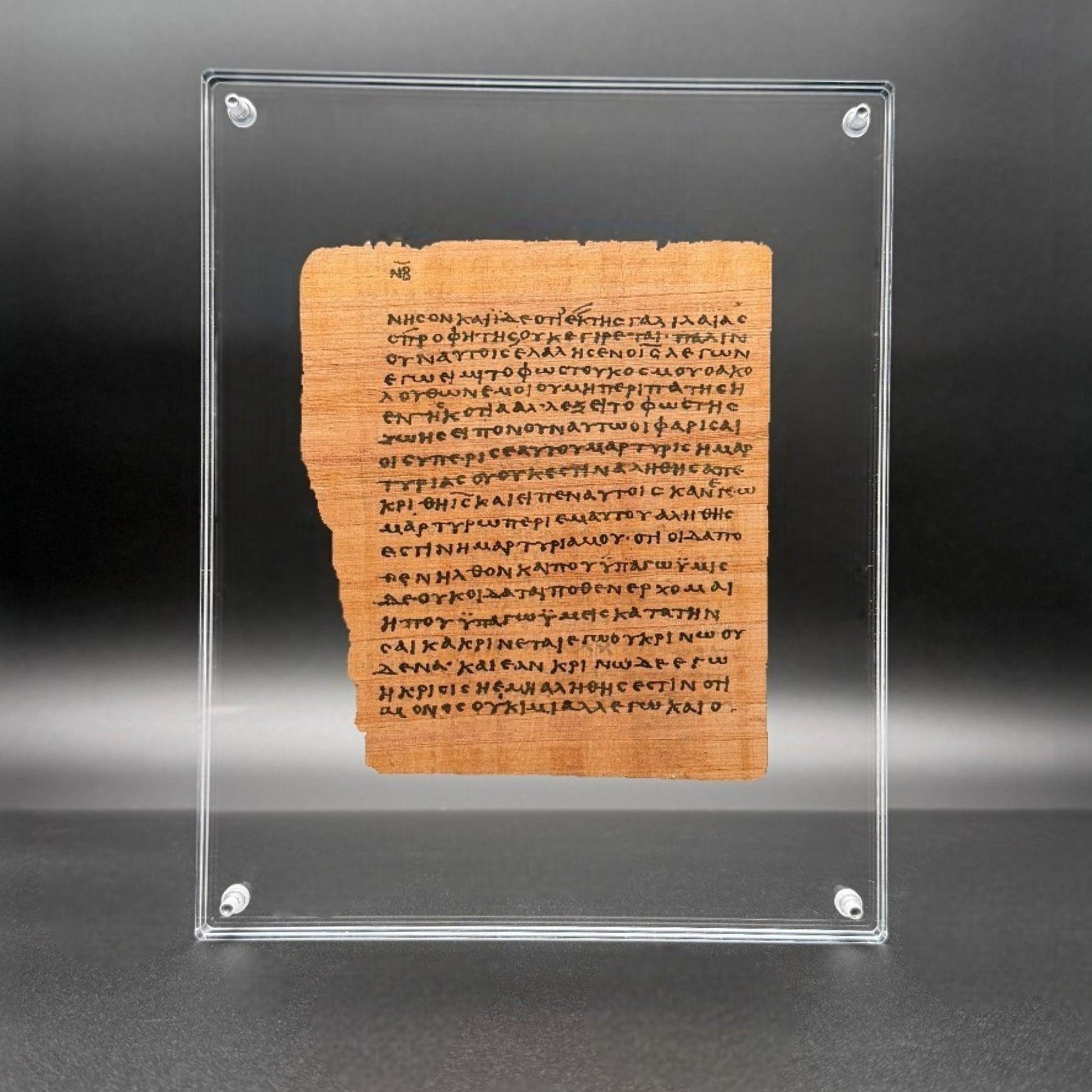
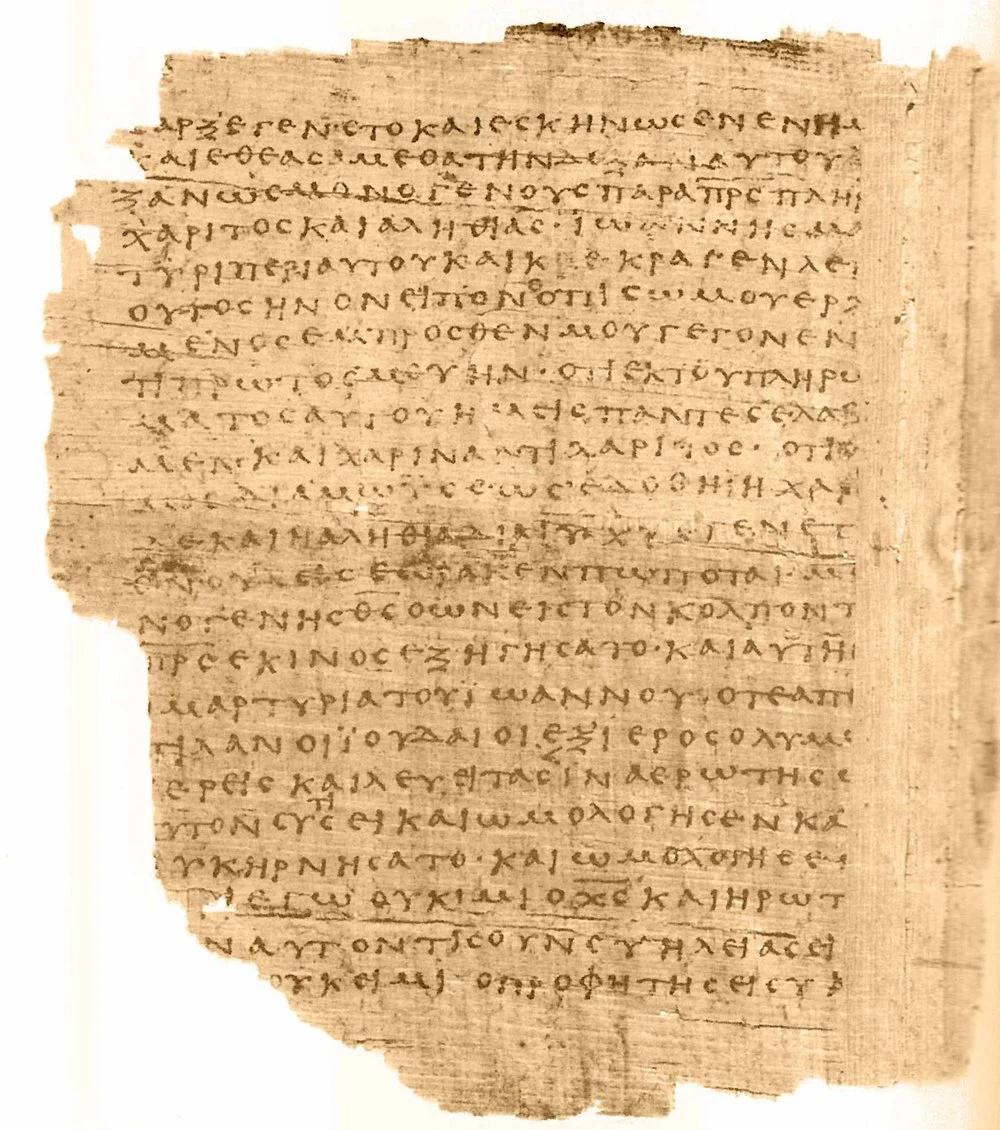
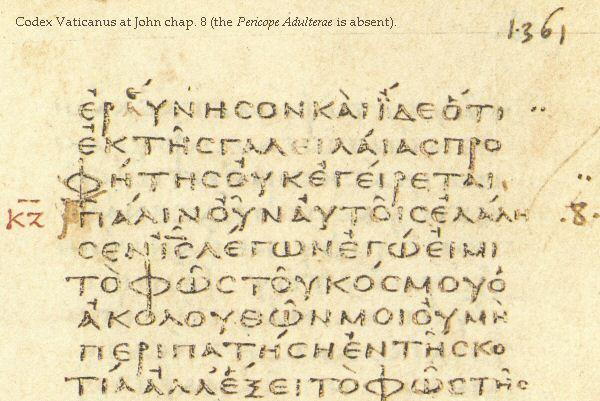
Papyrus 66 (P66)
Approximately AD 200
This early manuscript of John does not contain the story at John 7:53–8:11.
Papyrus 75 (P75)
Late second to third century, approximately
It also lacks the passage at its traditional location.
Codex Sinaiticus and Codex Vaticanus
Fourth century
Both omit the story at this point in John.
Other manuscripts include the passage, while some place it elsewhere in John or even in Luke. This variation is strong evidence that the story was not originally in John’s Gospel at its present location. That is the mainstream textual-critical conclusion.
Christian scholars agree that the evidence is that this passage does not appear in every early manuscript.
3. The strongest Christian arguments against corruption claims

1. A textual variant is not proof that the entire Bible is corrupted
The first distinction is between a particular passage’s textual history and the reliability of the whole biblical text.
We concede that John 7:53–8:11 was probably not part of the original text of John’s Gospel, but does this prove that the entire Bible was corrupted or that its central teachings are unreliable? No, it actually is evidence that we do have the original scripture before the 6th Century that the Quran claims to confirm and guard. The same Scripture that Muhammad refers to as the Injil (Gospel).
Textual criticism exists precisely because scholars compare surviving manuscripts to identify differences and assess the earliest recoverable wording. In this case, the evidence is visible, and the passage is marked as disputed in many modern translations.
Thus, we argue that an identifiable and openly documented textual variant is not, by itself, evidence that the entire biblical message has been lost or corrupted.
2: The story’s textual status and its historical authenticity are separate questions
The fact that a story was not originally written in John’s Gospel does not automatically prove that the event never happened.
Some scholars have suggested that the story preserves an early tradition about Jesus, although its precise historical origins cannot be established with certainty. The manuscript evidence can tell us where the story appears in surviving copies; it cannot independently prove whether the event happened.
We do not insist at all that the passage was even originally written by John to argue that the story may preserve an authentic memory of Jesus. Neither do we claim that its historical authenticity has been conclusively demonstrated.

3: The passage is not essential to the central Christian doctrines
The story teaches mercy, repentance, and the rejection of hypocritical judgment. These themes are also found elsewhere in the New Testament.
For example:
- Forgiveness: Luke 7:47–50.
- Mercy and judgment: Matthew 7:1–6.
- Repentance and a changed life: Luke 13:3; John 5:14.
- God’s mercy toward sinners: Romans 5:8.
The point is not that these verses prove the adultery story originally belonged in John. They demonstrate that the removal of this one disputed passage does not eliminate these teachings from the New Testament.
No major Christian doctrine depends on this textual variant. It is complementary to the central Christian doctrine.
4: Apply the same standard consistently
It is reasonable to apply the same standard of criticism to the Quran as applied to the Bible, as we do not assume that every difference between biblical manuscripts and Quranic readings is equivalent.
We need to distinguish between:
- a passage that is absent from early manuscripts;
- a variation in wording;
- a variation that changes meaning;
- and a claim that the entire scripture has become unreliable.
These are different claims and require different evidence.
If one disputed passage establishes that the whole Bible is corrupted, what specific evidence demonstrates that conclusion? And what consistent criteria do you use to evaluate textual variations in other scriptures?
We are not claiming the Quran has exactly the same textual history. The Quran and Bible have different transmission histories, and each needs to be evaluated using its own evidence.
4. Response against Scriptural corruption claims
We acknowledge that John 7:53-8:11 is absent from the earliest Greek manuscripts, and many scholars consider it a later addition to John’s Gospel. But that does not prove the Bible is corrupted. Textual criticism allows us to identify disputed passages by comparing manuscripts, and this passage is openly marked as disputed in modern Bibles.
Furthermore, the question of whether the story originally belonged in John’s Gospel is different from whether it preserves an authentic historical tradition about Jesus. Those questions should not be confused.
If you claim this passage disproves the reliability of the Bible as a whole, you must be able to demonstrate how that conclusion follows from the evidence rather than simply asserting it. Measure all Scripture by the same standard, and provide evidence that it comes from the true God. Can the Quran withstand the same scrutiny?